A fleet of airplanes. A group of pilots. One system.
Easy scheduling and easy billing, and it already knows who's current and what's due on every airplane.
Simple to run. Complete out of the box.
Most clubs outgrow the shared calendar a good while before anyone admits it. Vector takes the scheduling and the billing, and it already knows what's due on each airplane and who's legal to fly it.
Easy scheduling
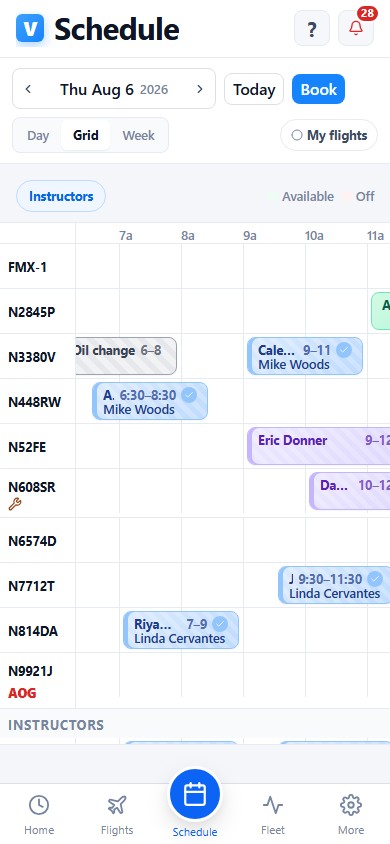
Members book from a phone against what's genuinely free, and the schedule already knows what's down and what each airplane is cleared for.
Easy billing
Dues, hourly, or both. Charges land on the member's account when the flight closes out, not at the end of the month.
Already complete
Currency, maintenance, squawks and documents are all part of it. If flying the club's airplanes is what you do, this is the whole thing.
Booking takes a few taps
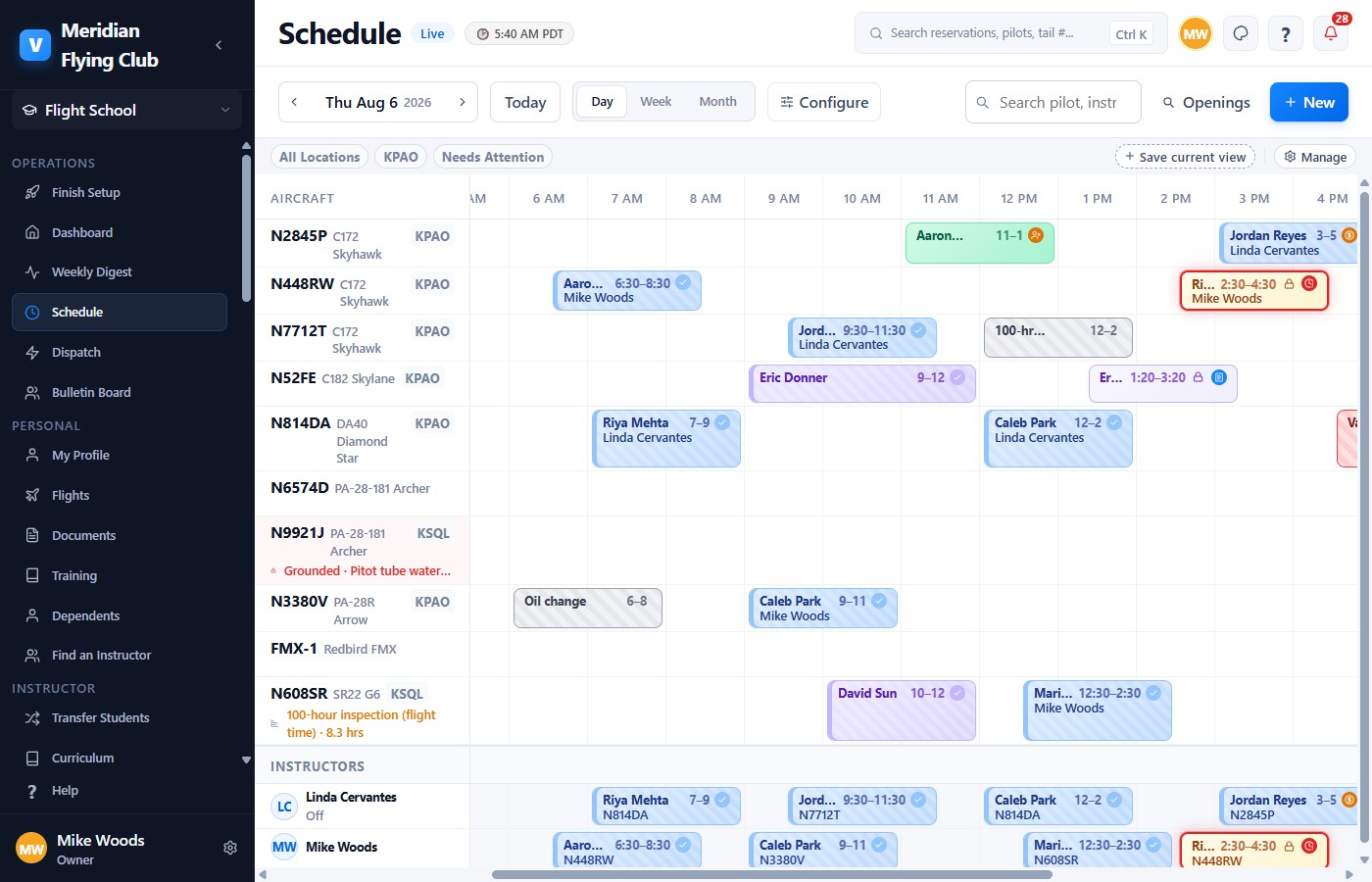
Every airplane and every member on one grid. Somebody books at nine at night from the couch, and the schedule already knows the Archer is down for its annual and the Skyhawk is VFR-only until the landing light gets replaced. Nobody has to text the maintenance officer to find out.
- Self-serve booking against real availability, around the clock
- Maintenance holds sit on the same calendar as the flights
- Restrictions carried through, so a booking matches what the airplane can actually do
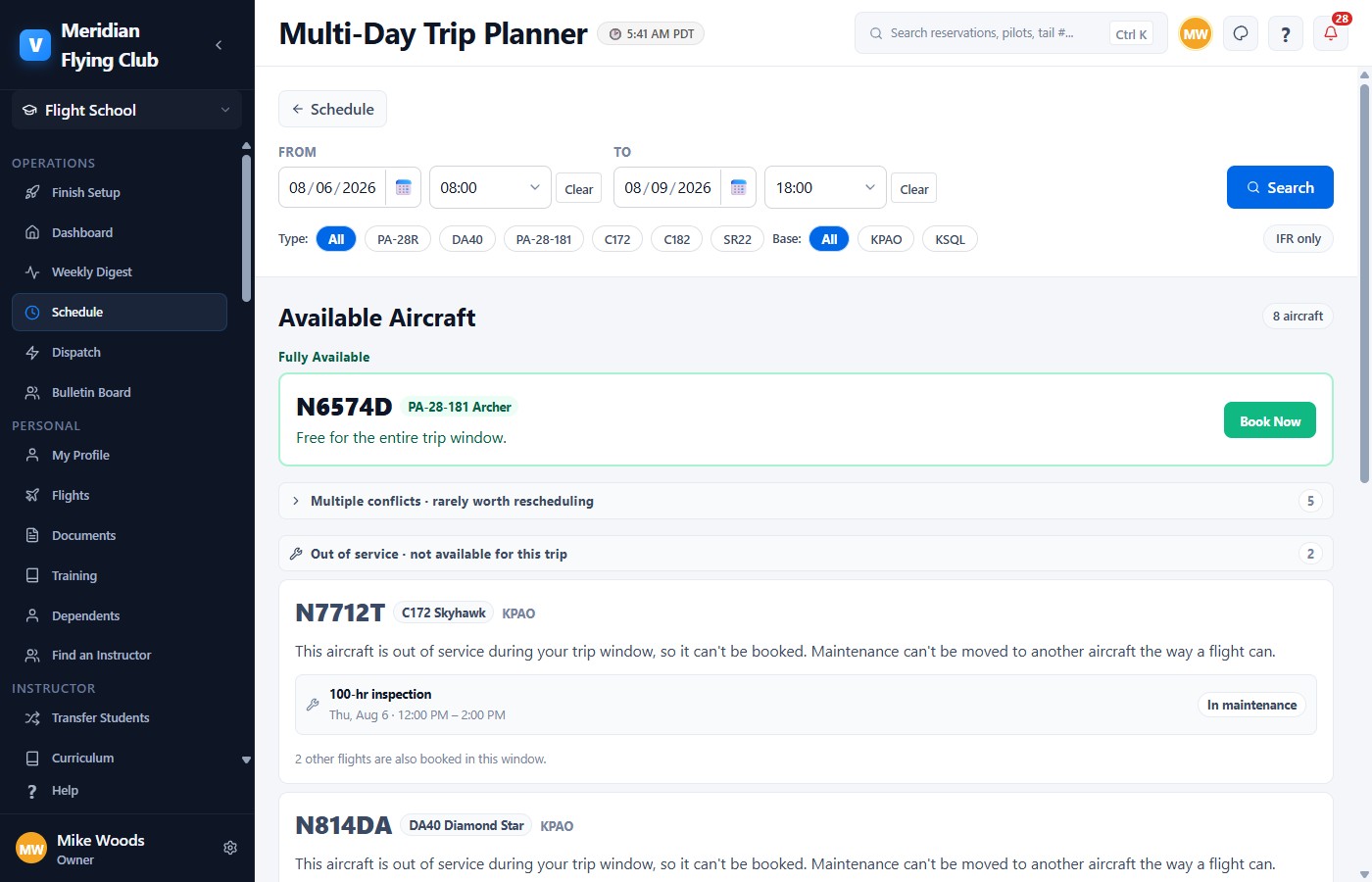
Somebody wants an airplane for four days
Put in the dates and you'll see which airplanes are free the whole time, which have a single booking in the way, and which are in the shop and staying there. If the one booking is worth moving, Vector offers that member another airplane of the same type rather than just cancelling on them.
- Date-range search across the fleet, by type, base and IFR capability
- Free or nearly free, ranked so the easy answer is first
- Move the booking, not the trip — reassign to an equivalent airplane
Currency, without anyone chasing it
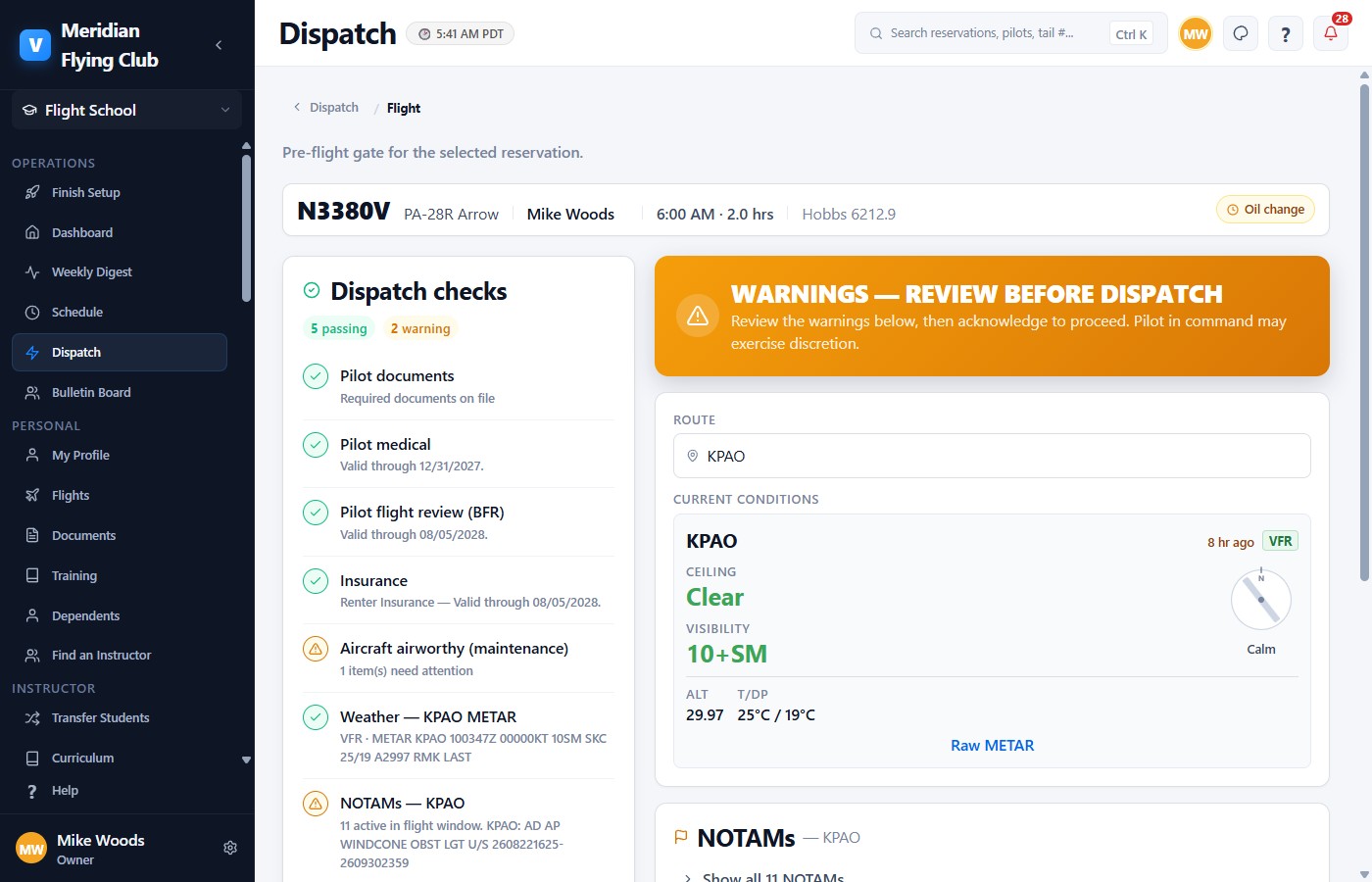
Medicals, flight reviews, renter insurance and club checkouts sit on the member's record. Vector checks them when the booking is made and again before the airplane goes out, and it tells the member what's coming due while there's still time to do something about it.
- Stored once, checked on every flight
- Warned early, so a lapse turns up at the kitchen table and not at the airplane
- Overrides when someone has to make the call, recorded with a name and a reason
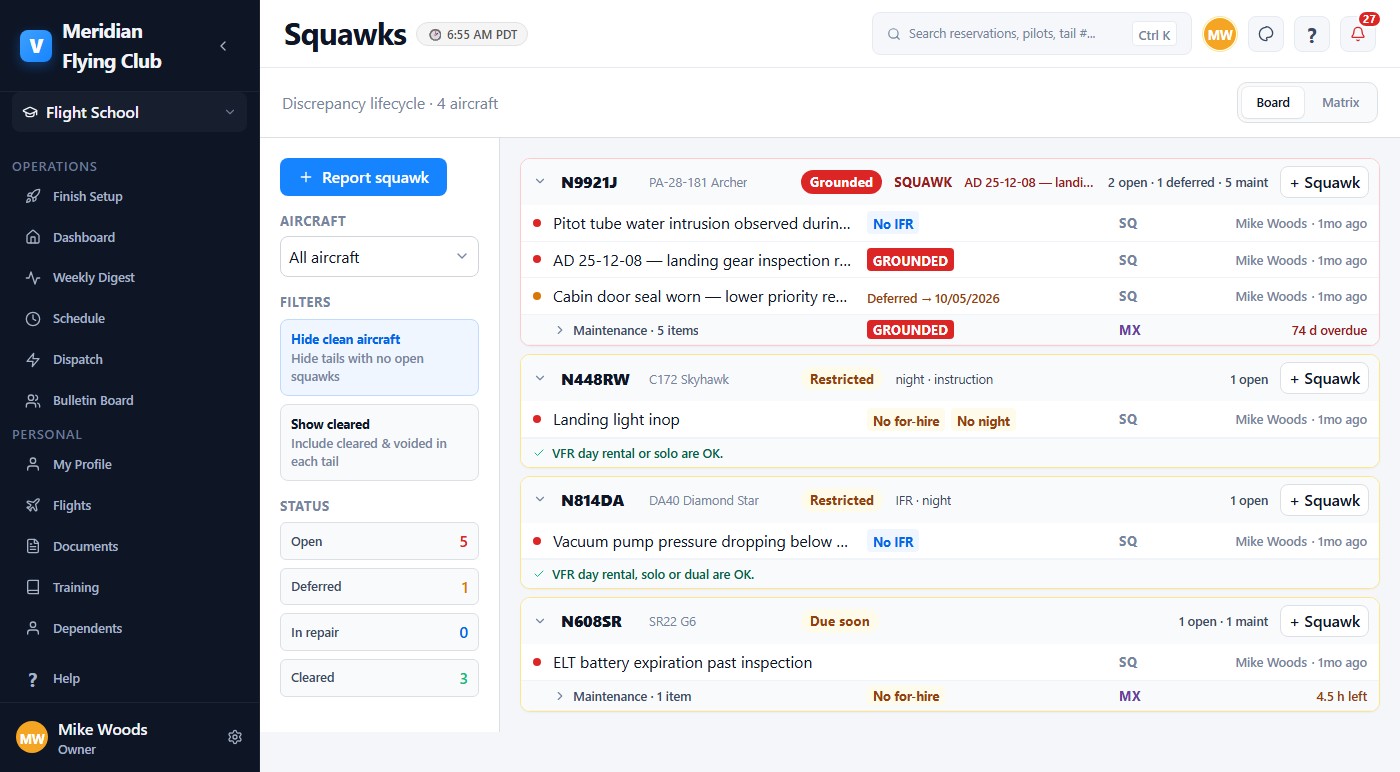
Squawks get written up at the airplane
A member writes it up on the ramp, photo and all, and it lands on the board under that tail number. What the next person sees isn't a maintenance code — it's the part that affects them: this one's fine for a VFR day flight, this one's no good at night, this one isn't going anywhere.
- Filed in under a minute, before anyone forgets the detail
- Read in plain language by whoever books it next
- Grounding clears the schedule and tells the members who lose a booking
The whole club fits on a phone
The same schedule, sized for a phone. Members book, check in, write up a squawk and see what they owe from wherever they are. There's no app to install and nothing to keep updated, because it's a web page.
- The whole fleet schedule, not a cut-down version of it
- Booked in a few taps from the hangar or the couch
- No app store and no second login
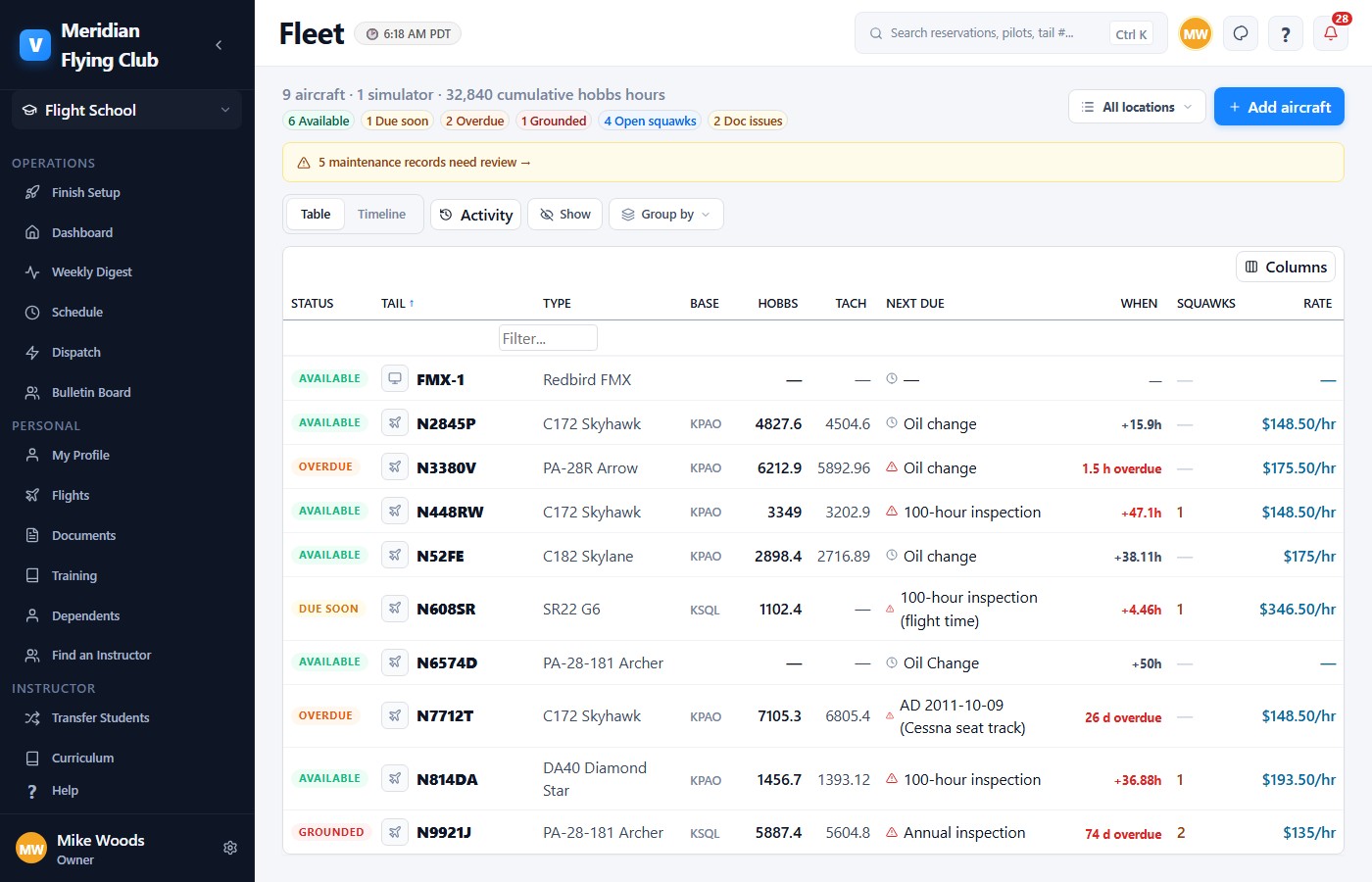
What each airplane needs, and when
Inspections, ADs and oil changes for the whole fleet, counted down in hours and days. Hobbs and tach come off each flight as it closes out, so the countdown stays honest without anyone copying numbers off a clipboard. When something comes due, the shop visit goes on the same calendar the members book from, and they can't book over it.
- Next due per airplane in hours or days, overdue called out
- Meters captured at close-out and carried forward on their own
- Shop visits scheduled against the flights, not on a separate sheet
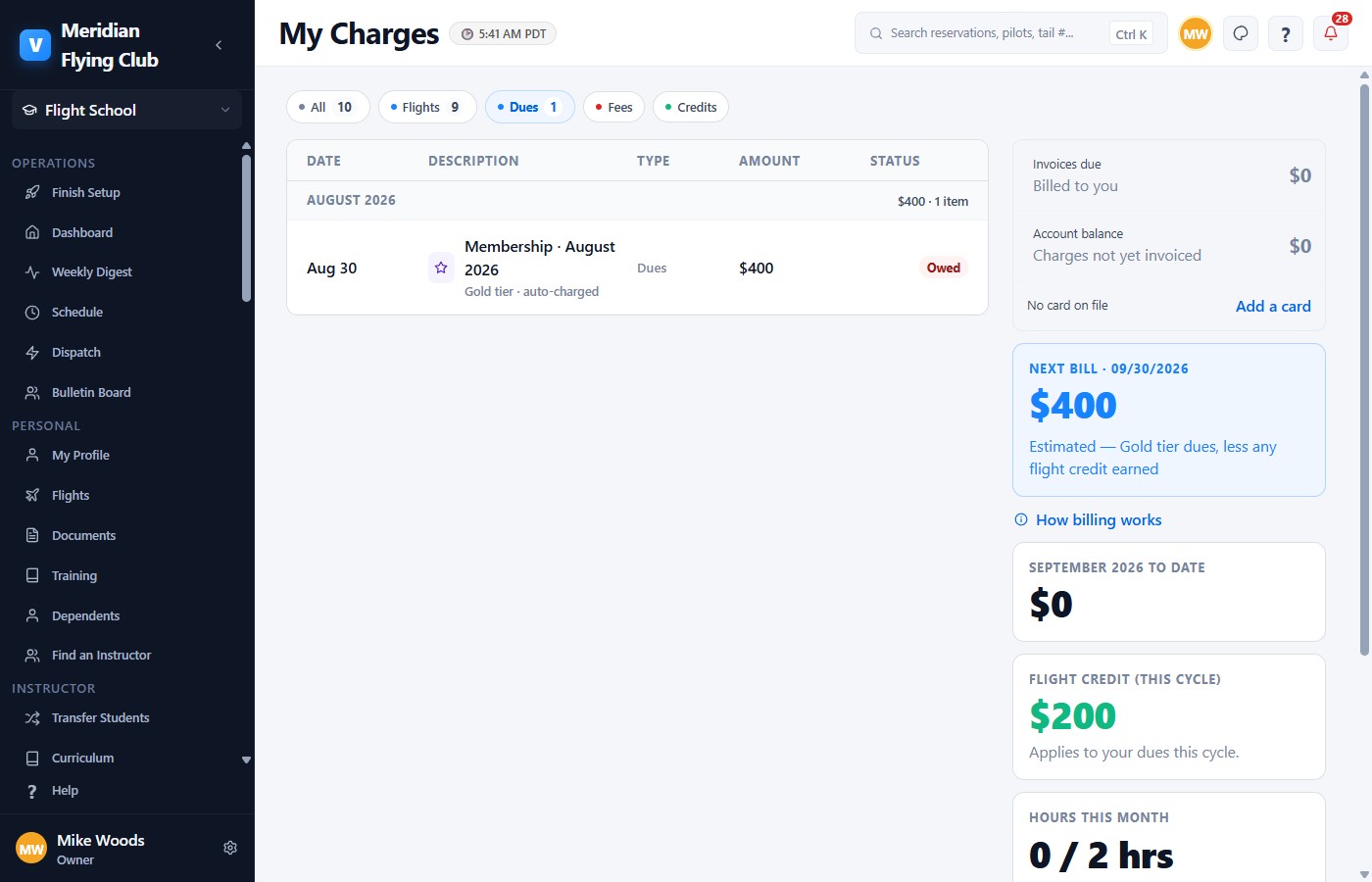
Bill the way your club already bills
Dues that charge themselves every month. Hours included with a tier. Flight credit that comes off the next dues run. Straight hourly rental. Payment at check-in for the members you'd rather not carry. Everyone can see their own balance and roughly what next month looks like, which is most of what a treasurer currently answers by email.
- Recurring dues by tier, with proration handled
- Included hours and flight credit worked out for you
- Card and ACH through Stripe at cost
When the airplanes aren't all the club's
If some of the fleet belongs to members or to owners outside the club, the monthly statement comes straight out of the flights Vector already billed: what the airplane earned, what came off it for maintenance and management, and what carries forward. You're not keeping a second set of books to make the two agree.
- Per-aircraft settlements built from closed-out flights
- Earned against owed, itemized line by line
- Carried balance across periods
And the training side, if anyone instructs
Plenty of clubs have a CFI or two and a member working on an instrument rating. That's already built — curriculum, lesson grading, endorsements and signed records, on the same member record and the same schedule. If nobody in your club instructs, you'll never run into it.
- Curriculum and progress per member
- Endorsements from the built-in AC 61-65 catalog
- Signed records, exportable — see training
It's all in the one price.
Everything here comes with the flight school product. If your club also runs a maintenance shop or a charter operation, those are their own separate products — not pieces of this one you have to buy back.
Documents
Medicals, certificates and insurance on file, with a reminder before they lapse.
Weight & balance
Per-airplane profiles, worked out and saved with the flight.
Reports
Utilization, hours by member, cancellations and what's owed.
Fuel receipts
Reimbursement from a photo of the receipt, credited to the member.
Bulletin board
Club announcements where the members already are.
Flight tracks
Where the airplane actually went, attached to the flight.
Try it on your own fleet.
Set up the airplanes and the rates in an afternoon. Free trial, no card.
Start free trial